Posted on Leave a comment

Firearms and Toolmark Examiner Explained

Firearms and Toolmark Examiner Explained

Firearms and Toolmark Examiner Explained

When a bullet casing engraved with unique striations is the only lead in a homicide, a firearms and toolmark examiner goes to work. This forensic discipline doesn’t rely on guesswork; it’s a meticulous science of comparing microscopic imperfections left by guns and tools. As a dealer at Indiana Gunshop, I handle hundreds of firearms, and the concept of individual characteristics—the tiny, random marks a barrel or breech face imparts—is fundamental to understanding both forensics and firearm mechanics.

The Core Science: Individual vs. Class Characteristics

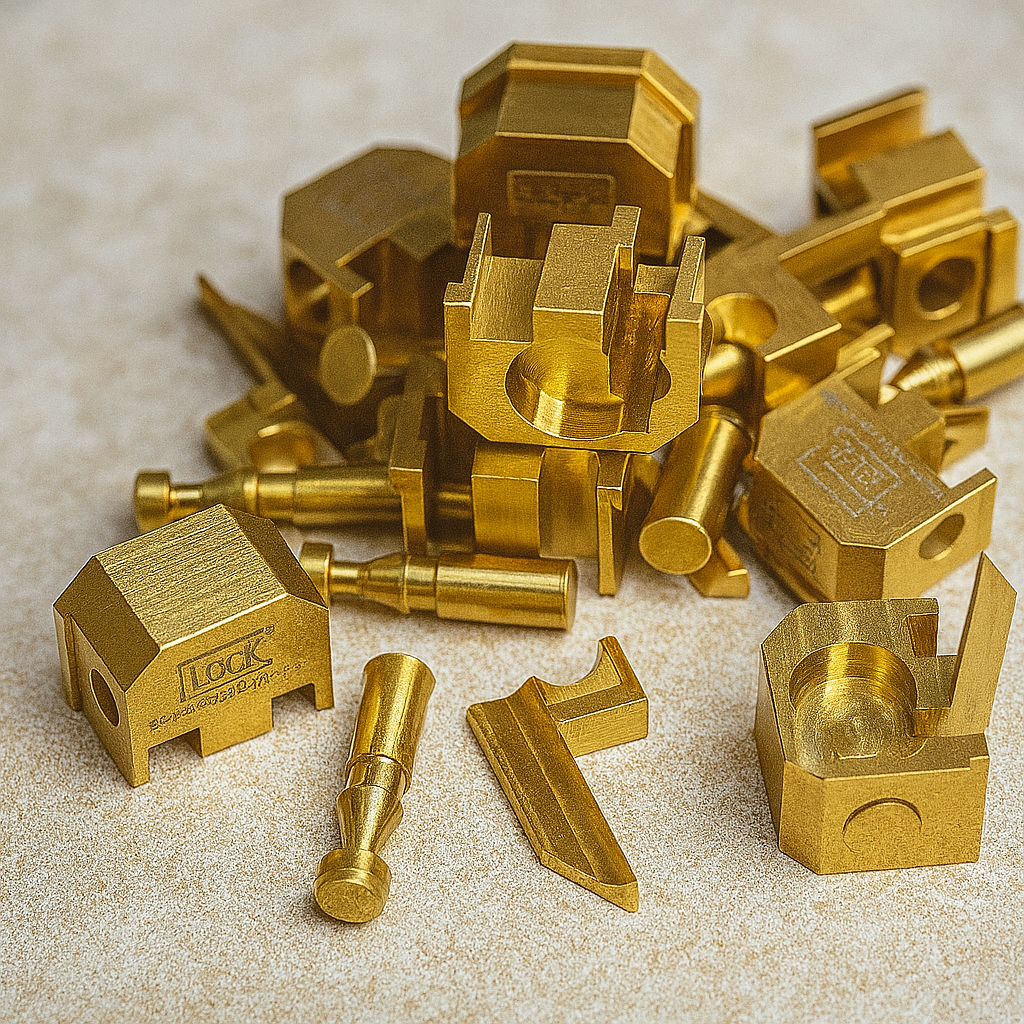
Every examiner operates on a core principle: firearms and tools impart two types of marks. Class characteristics are the broad, design-based signatures. A 9mm Glock 19 barrel, for instance, will have six lands and grooves with a right-hand twist. That tells you the general type of firearm. Individual characteristics are the random, microscopic imperfections created during manufacturing, wear, and corrosion. The unique scratch pattern inside that specific Glock’s barrel, or on its firing pin, is what sets it apart from every other Glock 19. At Indiana Gunshop, when we detail-strip a used Smith & Wesson M&P for inspection, we’re seeing the very source of these marks—the tooling on the breech face, the extractor, the ejector. These parts are the “tools” creating the “toolmarks” on cartridge cases.

The Examination Process: From Crime Scene to Comparison Microscope

The process is chain-of-custody intensive and methodical. First, examiners test-fire the submitted firearm into a water tank or cotton recovery box to obtain known exemplars. These pristine cartridge cases and bullets provide the standard for comparison. The examiner then places a crime scene specimen and a test-fired exemplar under a comparison microscope. This side-by-side view is critical. They look for consecutive matching striations (CMS)—a reproducible pattern of lines in the same spatial relationship. Finding sufficient CMS on multiple evidence items (a casing from the firing pin impression and the ejector mark, for example) can lead to an identification to a specific firearm. It’s not about a single perfect mark; it’s about the reproducibility of a complex pattern.

Limitations and Controversies in the Field

While authoritative, the discipline faces scientific scrutiny. The core criticism is the lack of a universally accepted, statistically rigorous threshold for a “sufficient” number of matching striations. An identification is ultimately a subjective opinion based on the examiner’s training and experience. Factors like degraded evidence, damaged firearm components, or the use of non-jacketed ammunition (like .22 LR) can complicate analysis. Furthermore, the AFTE Theory of Identification states that an identification can be made without a specific minimum number of matching lines, which critics argue is not empirically founded. As professionals who deal with the hardware daily, we understand that toolmarks can change with use, cleaning, or corrosion, which adds another layer of complexity to the examiner’s task.

Practical Implications for Gun Owners and Buyers

For the responsible gun owner, this science has direct relevance. It underscores the importance of firearm security. Your firearm’s unique “fingerprint” can link it to any cartridge it discharges. It also informs maintenance. Aggressive brushing of a barrel or filing on a firing pin can alter its individual characteristics, though core class characteristics remain. When purchasing a used firearm, a keen buyer might consider its forensic history, which is why reputable dealers like Indiana Gunshop provide transparency. Understanding that your new Springfield Hellcat’s barrel leaves a distinct signature is part of grasping the full responsibility of ownership. This knowledge reinforces why we treat every firearm as an individually accountable tool.

Can a firearms examiner determine if a specific gun fired a bullet if the barrel has been replaced?

Yes, but the identification would be to the specific firearm’s receiver components, not the barrel. The examiner would focus on marks left on the cartridge case by the firing pin, breech face, extractor, and ejector—all parts typically housed in the firearm’s frame or slide. A new barrel changes the bullet’s markings, but the casing markings often remain consistent. This is why examiners always collect both fired bullets and cartridge cases for comparison.

How long do examiners keep test-fired evidence from a firearm?

This varies by agency policy, but it is common for reference collections to be retained indefinitely. Major databases like the National Integrated Ballistic Information Network (NIBIN) store digital images of ballistic evidence for years. When a firearm is sold through a licensed dealer, like Indiana Gunshop, it is not test-fired for a forensic database unless it is part of a law enforcement transaction or a specific state’s requirement.

Does ammunition type affect a toolmark examination?

Absolutely. Jacketed ammunition (e.g., standard 9mm FMJ) provides clearer, more consistent markings on bullets than plain lead projectiles. The hardness and composition of the cartridge case brass also affect the quality of breech face and ejector marks. Examiners must test-fire with ammunition of the same brand and type as the evidence when possible, as different primers and case hardness can yield different impression depths.

Browse our firearms collection

Last updated: March 27, 2026
Posted on Leave a comment

Firearms and Ammo: A Practical Guide

Firearms and Ammo: A Practical Guide

Firearms and Ammo: A Practical Guide

A 9mm round fired from a Glock 19 has a different purpose, trajectory, and terminal effect than a .223 Remington from an AR-15. Understanding that firearm and ammunition are a single, integrated system is the first step toward effective, safe shooting. Choosing the wrong combination isn’t just inefficient; it can be dangerous.

The Caliber Conversation: Matching Round to Role

Caliber selection isn’t about finding the “best” one; it’s about matching a cartridge to a specific task. For concealed carry, the balance of power, capacity, and controllability makes 9mm Luger the dominant choice. Modern hollow-point designs like Federal HST or Speer Gold Dot have closed any historical gaps in effectiveness. For home defense in a rifle platform, the .223 Remington/5.56 NATO is superior to a pistol caliber carbine. Its high velocity promotes fragmentation upon impact in drywall, reducing over-penetration risk compared to heavier, slower pistol rounds. For hunting, the equation changes again: a .308 Winchester provides the ethical energy for deer at range, while a .30-06 Springfield offers more versatility for larger game. At Indiana Gunshop, we stock firearms across these key calibers because each serves a distinct purpose.

Understanding Ammunition Specifications

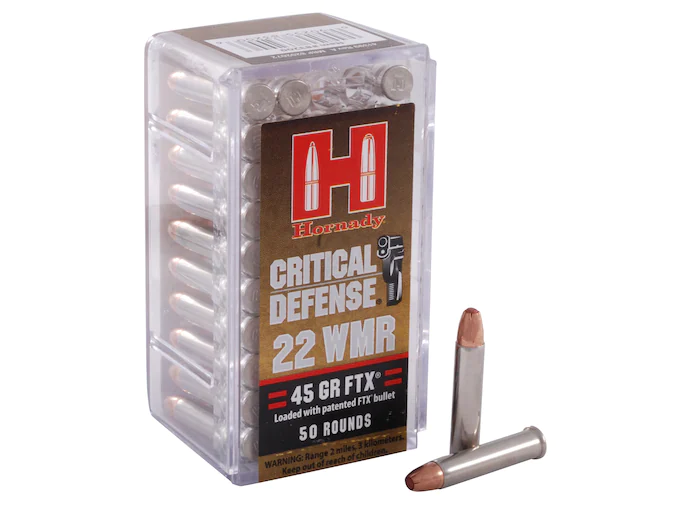
Not all ammo is created equal, even within the same caliber. You need to decode the box. Grain weight (gr) refers to the bullet’s mass. A 115gr 9mm round will have a snappier recoil and higher velocity than a heavier 147gr subsonic load, which is better for suppressed fire. The designation FMJ (Full Metal Jacket) is for range training and target shooting. JHP (Jacketed Hollow Point) is for defensive use, engineered to expand and transfer energy. Then there’s the manufacturer: military-spec ammo from Lake City or PMC is reliable for bulk practice. Defensive ammo from brands like Hornady Critical Defense or Winchester Ranger-T undergo rigorous testing for consistent expansion and reliability. Always verify your firearm’s manual for specific ammunition tolerances, especially with +P or +P+ high-pressure loads.

Close-up comparison of FMJ, JHP, and hollow point rifle ammunition on a table

Firearm Platforms: Built for Specific Ammunition

The firearm’s design dictates its ammunition compatibility. An AR-15 pattern rifle chambered in 5.56 NATO can typically also fire .223 Remington safely, but the reverse is not always true due to higher pressure in 5.56 chambers. A 12-gauge shotgun must match shell length (2 3/4″, 3″, 3.5″) to its chamber. Trying to force a 3″ magnum shell into a 2 3/4″ chamber is a critical safety hazard. Revolvers offer unique flexibility with calibers like .357 Magnum, which can also fire the milder .38 Special. Semi-automatic pistols, however, are far less forgiving. Feeding a micro-compact like a SIG P365 with wide-mouthed hollow points requires testing for reliable feeding—not all defensive ammo runs perfectly in every gun. This is why we function-test critical firearms at Indiana Gunshop before they ship.

Storage, Sourcing, and Legal Compliance

Ammunition is a perishable commodity. Store it in a cool, dry place, away from firearms, in its original packaging or labeled ammo cans. Moisture is the enemy. For sourcing, the panic-buy cycle is real. The savvy shooter maintains a reasonable stockpile of practice ammo (FMJ) and a separate reserve of proven defensive rounds. When buying online, always confirm shipping policies to your location. As a federally licensed dealer, Indiana Gunshop handles all ammunition transfers with full compliance, ensuring your purchase meets all state and federal regulations. Remember, while you can have ammo shipped to your door in Indiana, other states have restrictive laws. Knowing your local ordinances is your responsibility.

Organized ammunition cans and boxes stored on metal shelves in a dry environment

Can I use .223 Remington ammo in a 5.56 NATO chambered rifle?

Yes, you can generally fire .223 Remington in a rifle chambered for 5.56 NATO. The 5.56 chamber has a slightly longer leade (freebore), which accommodates the higher pressure of 5.56 rounds. Firing the lower-pressure .223 in it is safe. The reverse—firing 5.56 NATO in a .223 Remington-only chamber—can create dangerously high pressures and is not recommended.

What’s the difference between FMJ and JHP ammo?

FMJ (Full Metal Jacket) ammo has a soft lead core completely encased in a harder metal shell. It’s designed for target shooting and training, as it penetrates deeply with minimal expansion. JHP (Jacketed Hollow Point) ammo has a cavity in the bullet’s tip. Upon impact, it is designed to expand (or “mushroom”), creating a larger wound channel and transferring energy more efficiently while reducing the risk of over-penetration. JHPs are the standard for self-defense.

How much ammunition should I keep for my firearm?

There’s no legal limit for possession, but practical storage and usage dictate the amount. A good baseline is to keep at least 500-1000 rounds of practice ammo (FMJ) per primary firearm to train through market shortages. For defensive firearms, maintain a minimum of 100-200 rounds of the specific JHP load you’ve tested and trust for reliability. Rotate your defensive ammo every few years by shooting it at the range and replacing it with fresh boxes.

Browse our firearms collection

Last updated: March 27, 2026

Posted on Leave a comment

Firearms & Use of Force: The Essential Handbook

Firearms & Use of Force: The Essential Handbook

Firearms & Use of Force: The Essential Handbook

You’re in a low-light parking garage when a figure emerges from behind a pillar, closing distance fast with a weapon in hand. Your hand goes to your holster. In that split second, your legal and ethical justification hinges on a complex matrix of perception, ability, opportunity, and preclusion. This isn’t a movie; it’s the reality of armed self-defense. Understanding use of force isn’t optional—it’s the most critical component of responsible firearm ownership, far more important than the brand of your pistol or the grain weight of your carry ammo.

The Legal Foundation: Justification is Everything

In the United States, use of force law is primarily state-specific, but common principles form a nationwide framework. The core concept is justification. You must be able to articulate an immediate, unavoidable threat of death, serious bodily injury, or (in some states) a forcible felony. This threat is often analyzed through the “reasonable person” standard: would a hypothetical reasonable person, with your same knowledge and in your same circumstances, have perceived the same imminent danger? Mere fear isn’t enough. The aggressor must demonstrate the Ability (means to cause harm), Opportunity (proximity to employ that means), and Jeopardy (hostile actions/intent indicating they will use it). If any leg of that triad is missing, your legal justification likely collapses. Indiana, for instance, has a “Stand Your Ground” statute (IC 35-41-3-2) but that doesn’t remove the duty to prove you acted reasonably. At Indiana Gunshop, we believe selling a firearm comes with the responsibility to point owners toward this legal education first.

The Force Continuum: It’s Not Just “Draw and Shoot”

A common and dangerous misconception is that a firearm is the only tool for conflict resolution. In reality, responsible defenders operate on a mental force continuum. This isn’t a rigid ladder you must climb step-by-step, but a spectrum of options. It begins with your presence and verbal commands, escalates to empty-hand control or less-lethal tools like pepper spray, and only reaches the level of lethal force when justified. The key is the concept of proportional force. You cannot legally respond to a shove with a 9mm round. This is why many experienced carriers also have a less-lethal option on their person. Your mindset should be to use the minimum force necessary to stop the threat and regain safety. Drawing your firearm is a lethal force action—it communicates your readiness to kill. Ensure every action, from your stance to your commands, supports the justification for being at that level on the continuum.

Glock 19 Gen5 MOS pistol

Platforms like the ubiquitous Glock 19 are common choices for defense, but the hardware is useless without the correct software—your knowledge of the force continuum.

After the Shot: The Real Fight Begins

If you are ever forced to use your firearm defensively, the moment the trigger breaks is not the end—it’s the beginning of a new, more complex phase. Your immediate duties are to ensure the threat is stopped, secure your own firearm, and call 911. Your statement to the 911 operator is evidence. Stick to the basics: “I was attacked, I shot in self-defense, send police and an ambulance, I am at [location], I will be wearing [description].” When police arrive, you will likely be in a state of physiological shock. You are not thinking clearly. This is why attorneys universally advise you to clearly state “I was in fear for my life, I will sign the complaint, but I need to speak with my attorney before I make a full statement.” Then remain silent. Do not re-enact the scene. Do not speculate. The aftermath is a legal and investigative process where every word is dissected. Your physical and mental preparedness must include a plan for this moment, including having legal representation ready.

Training Beyond the Range: Scenario-Based Decision Making

Static target practice is a foundation, but it does not prepare you for the dynamic chaos of a defensive encounter. Your training must evolve to include judgmental shooting and scenario-based decision drills. This means practicing target identification (hostage taker vs. bystander), shoot/no-shoot decisions under time stress, and movement. Does your range allow you to draw from concealment? Can you practice moving off the line of force? Training tools like laser cartridge systems (e.g., Mantis X) for dry-fire can build these decision-making skills at home. The goal is to ingrain the OODA loop (Observe, Orient, Decide, Act) under stress. Your equipment choices, like a quality weapon-mounted light on your home defense rifle, are part of this. Can you positively identify a threat in your dark hallway without muzzling a family member? This is the nexus where gear, skill, and use-of-force law meet.

SureFire X300 Weapon Light

A high-lumen weapon light like the SureFire X300 is a critical tool for positive threat identification, a fundamental use-of-force requirement.

State-Specific Nuances: Indiana’s Laws

While foundational principles are universal, the devil is in your state’s details. Indiana law provides robust self-defense protections. There is no duty to retreat anywhere you have a legal right to be (Stand Your Ground). The use of force, including deadly force, is justified to prevent a forcible felony or against someone who unlawfully and forcibly enters your dwelling, occupied vehicle, or curtilage. However, “forcible felony” has a specific legal definition (IC 35-41-1-11.5). You cannot use deadly force solely to protect property. Furthermore, you lose justification if you are engaged in criminal activity or are the initial aggressor (unless you completely withdraw and communicate that withdrawal). Ignorance of these statutes is not a defense. Every Indiana firearm owner should read IC 35-41-3-2 and consider a state-specific course like those offered by US LawShield. We at Indiana Gunshop always recommend pairing your firearm purchase with dedicated legal education.

Where can I find an official use of force handbook?

There is no single “official” national handbook. Your primary resources are your state’s criminal code (Title 35 for Indiana) and authoritative, state-specific legal guides from organizations like the USCCA or attorneys like Andrew Branca. Always verify information against your state’s actual statutes.

Is a warning shot ever legally justified?

Almost universally, no. A discharged firearm is considered lethal force. Firing a warning shot fails the “immediacy” and “reasonableness” tests—it shows you did not believe deadly force was instantly necessary, yet you still recklessly used a lethal instrument. It also creates an uncontrolled ballistic hazard. Legally, it’s a minefield; tactically, it’s a terrible idea.

What’s the difference between “Stand Your Ground” and “Castle Doctrine”?

Castle Doctrine specifically applies to your home (and sometimes vehicle/workplace). It often includes a presumption that an unlawful, forcible entry justifies a reasonable belief of imminent harm. Stand Your Ground removes any legal duty to retreat from a place you have a right to be before using force. Indiana has both: a strong Castle Doctrine (IC 35-41-3-2) and a Stand Your Ground law, but neither removes the core requirement that your use of force be reasonable and justified.

Do I need a lawyer before I ever have an incident?

Yes, absolutely. Having a pre-paid legal defense plan or a known attorney specializing in self-defense law is as crucial as your firearm itself. After a defensive shooting, you will be in no condition to shop for competent counsel. Pre-arranged access ensures an expert guides you from the first moment police contact you, protecting your rights during the most vulnerable period.

What about the Canadian firearms handbook?

The Canadian Firearms Safety Course (CFSC) manual is the official guide for licensing in Canada. It focuses heavily on safe handling, storage, transportation, and Canadian laws, which are fundamentally different from U.S. law. It does not cover use of force for self-defense, as Canada’s legal framework for using firearms defensively is extremely restrictive and the outcome of any defensive use is highly uncertain under Canadian law.

Browse our firearms collection

Last updated: March 27, 2026